Proof-Based Marketing
Proof sells. Promises don't.
Proof-Based Marketing is the modern marketing strategy for building trust with prospects to increase leads and sales. It replaces "trust us" with the words of customers who already did. This guide explains what it is, how it fits the inbound flywheel, and how to put it to work.
On this page: What is Proof-Based Marketing? · Strategies · How to implement
Watch
The Future of Marketing Relies on Proof
Stephanie Hall explains the Proof-Based Marketing strategy and why promises alone no longer move buyers.
What is Proof-Based Marketing?
The old way asks for trust. The new way earns it.
Proof-Based Marketing is based on the philosophy that today's customers rely on reviews, testimonials and word-of-mouth referrals to make buying decisions. It is no longer enough to promise prospects you can solve their problems or relieve their pains. They expect to see proof that you have done for others what you claim you can do for them.
The old way: Promise-Based Marketing
- ✕Relies on the expectation that prospects should blindly trust you
- ✕Makes claims about how you might help your prospects
- ✕Lacks follow-up with customers to identify detractors, passives and promoters
- ✕Results in online reviews skewing negative because happy customers aren't asked to share their experience
The new way: Proof-Based Marketing
- Relies on testimonials and reviews to establish trust with prospects
- Tells stories about past customers like the prospect and how you relieved their pain or solved their problem
- Proactively collects feedback to improve customer relationships and business processes
- Results in an accurate distribution of positive and negative reviews
The Flywheel
Proof-Based Marketing picks up where inbound marketing leaves off.
Proof-Based Marketing replaces the old school of thought that sales reps control the buying process. Modern consumers have endless information at their fingertips and often navigate much or all of the buying process before ever talking to a human. Proof-Based Marketing turns that shift to your advantage: optimize experiences to wow customers, generate a positive online reputation, and build a library of social proof.
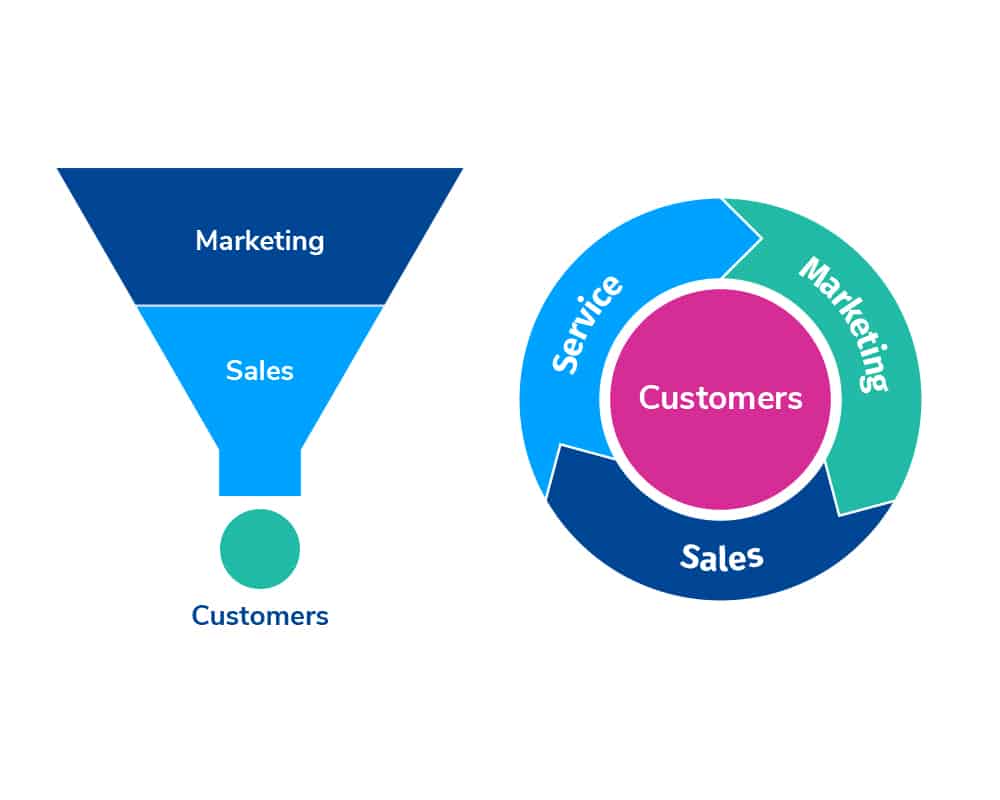
To see how it fits a modern strategy, consider the Flywheel. Introduced by HubSpot as an inbound marketing philosophy, the Flywheel replaces the traditional funnel with a circular process that puts customers at the center. It explains the momentum businesses gain by delivering an amazing customer experience, instead of treating customers as an output at the bottom of the funnel. You speed the Flywheel up by adding force where it has the biggest impact, and you reduce friction by eliminating the issues that slow it down.
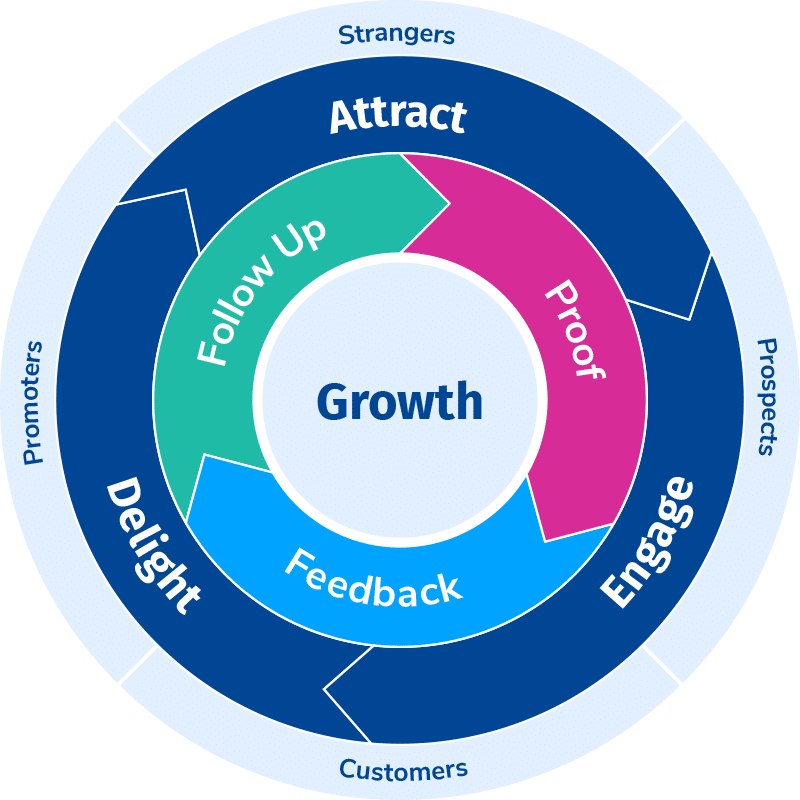
But how do you know where to focus? Proof-Based Marketing adds force to the Flywheel at crucial points of friction. When you take a customer-first approach at each transition, you can collect feedback, follow up, and gather praise to build momentum and drive revenue. It involves three key steps:
- Feedback: gather feedback and get a pulse on sentiment so you can segment customers, surface opportunities to improve, and identify your biggest promoters.
- Follow-Up: circle back with customers to make things right, capture praise, or request referrals.
- Proof: use that praise to prove to prospects that you can deliver, driving more leads and sales.
“Boast has been a game-changer for collecting testimonial videos. We struggled to connect with our Members and hear their feedback. With Boast, we received 40 videos within just a few weeks, and they're still coming in!”
Proof-Based Marketing strategies
The strategies below will help you embrace Proof-Based Marketing to wow customers, gather praise, and grow your business. Each step in the process involves specific ways of engaging with customers to fuel growth.
Feedback strategies
The Feedback stage is about understanding how customers feel, both individually and across the organization. A pulse on customer sentiment lets you segment customers, surface opportunities to improve, and identify your biggest promoters.
Feedback surveys
Customer feedback surveys show you how your customers talk, what they love about your product or business, and where you are missing the mark. Open-ended surveys inform marketing messaging; multiple-choice surveys inform business strategy. A feedback survey process is vital for any organization that wants to put customers first and use social proof to grow.
Experience metrics
Customer experience metrics like Net Promoter Score℠ (NPS®), Customer Satisfaction (CSAT) and Customer Effort Score (CES) are numeric scores that give a snapshot of how different areas of your business perform. NPS, for example, has been shown to accurately predict customer referrals and business growth. Track key metrics across your organization and you gain visibility into business health and future potential, plus the position to solve issues, make improvements, and grow faster.
Customer sentiment
Customer sentiment is an indicator of how customers feel about your business or brand, typically categorized as Promoters, Passives and Detractors. If you track a metric like NPS, you already have everything you need to segment customers by sentiment. Segmenting lets you monitor trends over time and make sure each customer gets the right follow-up, which is what keeps the Proof-Based Marketing machine running.
Follow-Up strategies
Once Feedback has separated your promoters from your passives and detractors, you can Follow Up effectively to make things right or capture praise.
Feedback responses
When a survey comes back with a less-than-favorable result, the most important thing you can do is follow up with that customer immediately. A process for proactively identifying and resolving issues puts you in control of the conversations happening around your brand, prevents negative reviews and word of mouth, and protects your online reputation.
Video testimonials
Responding to negative feedback keeps you customer-first, and prioritizing your promoters is just as important. Video testimonials are owned content you can repurpose across platforms to engage prospects and build trust. When a favorable survey arrives, have a process in place to automatically send a request for a video testimonial. A solid library of video praise is a key pillar of any Proof-Based Marketing strategy.
Online reviews
Alongside the social proof you own, build a strong online reputation off your website. This looks different for every business depending on industry, audience and offering. There are hundreds of review platforms, each serving different kinds of businesses. Do a thorough analysis, identify the platforms most relevant to your audience, and build a process for requesting reviews there from your Promoters.
Proof strategies
The Proof stage is when all the testimonials, reviews and customer stories you've collected provide the trust needed to generate the lead or win the customer.
Testimonial widgets
Your website and landing pages are among the most important places to prove prospects can trust you. Now that you've gathered feedback, segmented by sentiment, requested praise and started building your library, put those happy customers where they matter with widgets that display the right proof in the right place at the right time.
Third-party review sites
You've identified the review sites that matter to your audience and built a process for earning reviews there. The next opportunity is to use that reputation to increase sales. Share links to third-party reviews with prospects, publish badges from review sites on your website, and consider ads across key platforms to maximize reach.
User-generated content
Organizations that get the most from Proof-Based Marketing go beyond website testimonials and third-party reviews by repurposing praise in new ways: cross-posting to social media, turning videos into text or text into video, creating ads or showcase videos, and sharing testimonials in emails. Once the praise starts rolling in, the ways to use it to establish trust are endless.
Net Promoter®, NPS®, NPS Prism®, and the NPS-related emoticons are registered trademarks of Bain & Company, Inc., Satmetrix Systems, Inc., and Fred Reichheld. Net Promoter Score℠ and Net Promoter System℠ are service marks of Bain & Company, Inc., Satmetrix Systems, Inc., and Fred Reichheld.
How to implement Proof-Based Marketing
Now the fun part. Put it to work.
You know what Proof-Based Marketing is, how it benefits your business, and what the strategies look like. Implementation follows the same three stages.
Boast is the only Proof-Based Marketing platform, so we recommend our tools for the most seamless strategy and the best customer experience. There are other options depending on your tech stack and needs. Below are the key tools and steps for each stage and how to get started.
- Feedback is the foundation. Choose a platform with survey templates, decide on your questions, and automate as much of the request process as possible so no customer slips through the cracks.
- Follow-Up depends on notifications that differ by response. A human should personally follow up with every Detractor. Promoters can receive an automated request for a video testimonial or online review. Always require submitters to consent to marketing use.
- Proof is where you share the praise and back up your claims. Aggregate every response, organize it by type, product, service and message, then publish to your website and social channels or export it for other marketing and sales uses.
The toolkit
Tools for each stage of Proof-Based Marketing
Feedback tools
Feedback surveys, feedback request sequences, customer experience metrics, customer sentiment reporting, and rewards or incentives.
Customer survey softwareFollow-Up tools New
Feedback notifications and responses, video testimonial collection with Guided Prompts, online review requests, and consent management.
Video testimonial softwareProof tools
Display widgets, social integrations, praise management, video editing with Auto Captions, and showcase videos.
Explore display widgets
Proof in practice
Businesses running Proof-Based Marketing with Boast
- SederaHow a medical cost sharing community explained a product that sounds new and different by collecting 40 member videos in a few weeks.Read the story →
- Betr HealthHow a health food meal service displays positive feedback from over 20,000 happy customers in an impactful way.Read the story →
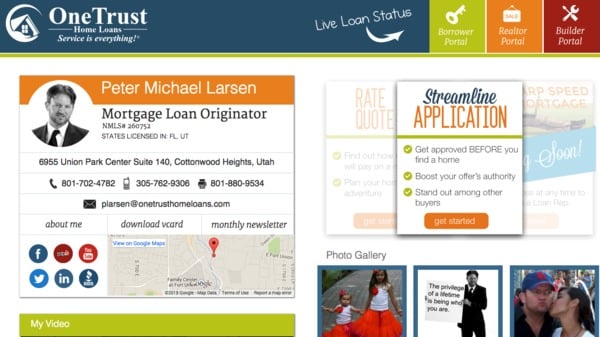 OneTrust Home LoansHow a mortgage lender gathers customer praise and spotlights unbiased recommendations that overcome buyer skepticism.Read the story →
What it costs to wait
Stop losing sales to inferior competitors because you lack social proof.
- Lost deals
Prospects finish most of the buying process before they talk to you. If your proof isn't where they're looking, a competitor's is.
- Reviews written by the unhappy few
Without follow-up, only detractors speak up. Your online reputation ends up describing your worst customer experiences.
- Issues you never hear about
Without feedback, the first sign of a problem is a cancelled contract or a one-star review.
- Praise that never gets used
Happy customers would gladly say so. Without a process to ask and publish, their words never reach a prospect.
Join the 8-week Proof-Based Marketing Challenge.
A free, step-by-step email series that takes you from your first feedback survey to published proof, one week at a time.
FAQ